SuppliesGuide
Harnesses for Large Cats: Fit, Escape-Proof Designs, Training
How to fit a harness on a large cat, vest versus H-style harnesses, escape-resistant features, harness training, and why a cat is never left tethered.
We earn from qualifying purchases through links on this page. How we make money.
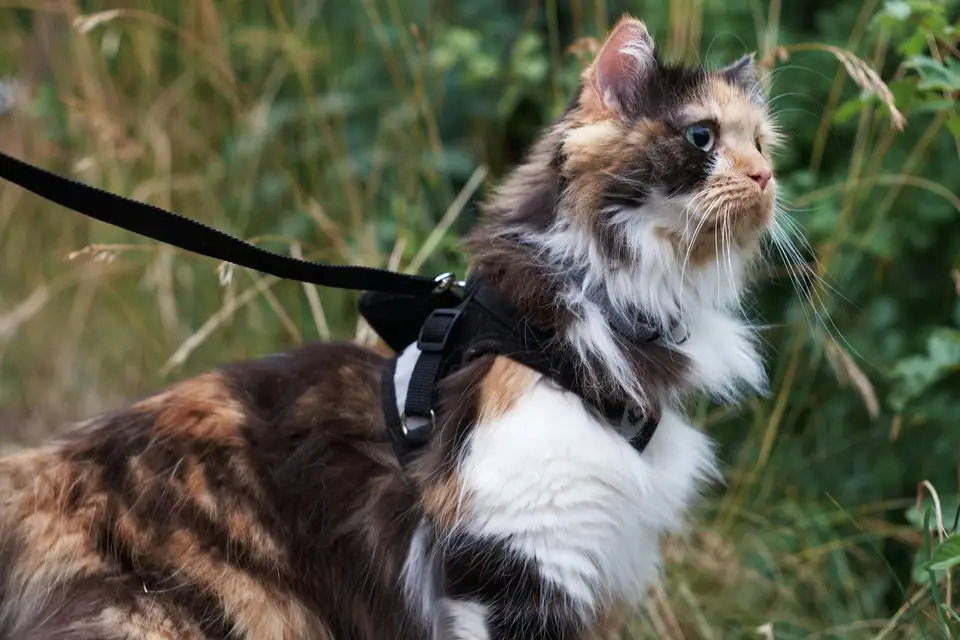
A harness for a large cat should fit the chest just behind the front legs snugly without pinching, and come with a maker size chart for big cats. Vest harnesses spread the load and are harder to back out of. Train slowly indoors, attach the lead to the harness, never a collar, and never leave a tethered cat alone.
Harnesses are one place where the size of a Maine Coon or Ragdoll is easy to underestimate: their thick coats make them look bigger than their chests are. Measure the cat, not the fur.
Should you walk a cat at all?
Advice differs. The Feline Veterinary Medical Association (FelineVMA, formerly the AAFP) lists walking on a harness and leash, alongside catios, as a safe way for indoor cats to sniff, explore and scent mark outdoors, and says a cat “can also be trained to walk on a harness and leash.” Humane World for Animals says harness walking gives a cat fresh air and exercise “in a safe way” and that training “takes time and patience.”
Cats Protection in the UK takes the opposite view: it says walking cats “is not recommended” because it is likely to cause stress. Both views agree on one thing: if your cat shows it is uncomfortable, stop. Some big, calm cats enjoy a harness; others never will.
How to measure a large cat for a harness
- Chest girth. Wrap a soft tape around the chest just behind the front legs. This is the key number.
- Neck. Measure where a collar would sit, for harnesses with a neck strap.
- Compare with the maker’s chart, not the size label. Sizes are not standard between makers.
- Check the fit on the cat. The straps should sit snug without pinching, as the maker describes, and the cat should not be able to pull its head back through.
On a long-haired cat, part the fur and measure against the body. A Maine Coon’s ruff can add inches that the harness will compress.
Vest or H-style?
| Style | How it fits | Notes for big cats |
|---|---|---|
| Vest (jacket) | Fabric panel wraps the chest, closes with buckles and hook-and-loop | Spreads pressure on a heavy cat; harder to wriggle out of |
| H-style (strap) | One strap around the neck, one around the chest, joined along the back | Lighter, adjustable; a loose fit is easier to back out of |
| Step-in | The cat steps into loops | Fine for calm cats; check it suits a broad chest |
“Escape-proof” and “escape-resistant” are makers’ descriptions, not tested standards. Features that help are an extra strap behind the front legs, a snug neck opening and buckles that cannot be pushed open by a paw. Check the fit each time, because a cat can back out of any harness that has loosened.
Cat harnesses and leash sets
Live listings, shown by eBay
Opens eBay in a new tab. Check condition, seller feedback and returns.
Harness training, step by step
Cats Protection’s steps, where you do choose to walk a cat:
- Get the cat used to gentle handling and restraint indoors, with praise or a treat.
- Let the cat see and sniff the harness, then put it on briefly at home and reward.
- Build up the time gradually. “If at any point your cat appears uncomfortable, go back a step.”
- Attach the lead “to a cat harness, not a collar.”
- Take the harness off when you are not walking: Cats Protection says not to leave it on.
Go outside only once the cat walks around the house calmly in the harness. Start in a quiet garden or yard, let the cat lead, and keep sessions short.
Never tie a cat out
Humane World for Animals is clear: “be sure to never leave your cat alone while they are tethered.” A tethered cat can tangle in the lead, panic, or be reached by dogs and other animals. Stay with your cat the whole time it is outside.
Strollers and carriers
For cats that do not take to walking, a pet stroller or a well-sized carrier gives outdoor time without the harness. See carriers for large cats for sizing. Harness and leash sets also make good gifts for an adventurous cat owner; see gifts for big cat lovers and the supplies hub.
Frequently asked questions
Can a Maine Coon wear a harness?
Yes, if it fits. Large breeds often need a size large or extra large; measure the chest just behind the front legs and the neck, then use the maker's size chart. Introduce it slowly indoors before any time outside.
What is an escape-proof cat harness?
A marketing term for designs that are harder to back out of, usually a vest that wraps the chest with a strap behind the front legs. No harness is guaranteed escape proof, so check the fit every time and stay with the cat.
How do you harness train a cat?
Gradually and with rewards. Cats Protection suggests getting the cat used to gentle restraint indoors first, building up step by step, and going back a step if the cat seems uncomfortable. The Feline Veterinary Medical Association lists harness walking as a safe outdoor experience a cat can be trained for.
Can I leave my cat tied up outside on a harness?
No. Humane World for Animals says never leave a cat alone while it is tethered. A tethered cat can tangle, panic or be reached by other animals.
Sources
- 10 Tips to Keep Your Cat Happy and Entertained IndoorsHumane World for Animals
- How to Bring an Outdoor Cat Indoors: Step-by-Step GuideHumane World for Animals
- Should I walk my cat on a harness and lead?Cats Protection
- Positive Reinforcement Training Educational Toolkit: Reinforcement Techniques (2026)Feline Veterinary Medical Association (formerly the AAFP)
- Cat Training Techniques for Caregivers (2026)Feline Veterinary Medical Association (formerly the AAFP)
Filed under SuppliesStart with Supplies for Large Cats: What to Size Up and What to Skip
Keep reading
Start here
Supplies for Large Cats: What to Size Up and What to Skip
Which cat supplies need sizing up for a large cat, from litter boxes and trees to carriers and harnesses, how to measure your cat, and what can stay standard.
Supplies
Question
Carriers for Large Cats: Size, Hard vs Soft, and Air Travel
What size carrier a large cat needs, hard versus soft carriers for vet visits, carrying a heavy cat, and the airline in-cabin limits that rule out big cats.
Supplies
Comparison
Cat Trees for Large Cats: Base, Posts and Perches That Hold
How to choose a cat tree for a large, heavy cat: base footprint, post thickness, perch size, maker weight limits, wall straps and furniture-grade options.
Supplies