SuppliesComparison
Cat Trees for Large Cats: Base, Posts and Perches That Hold
How to choose a cat tree for a large, heavy cat: base footprint, post thickness, perch size, maker weight limits, wall straps and furniture-grade options.
We earn from qualifying purchases through links on this page. How we make money.
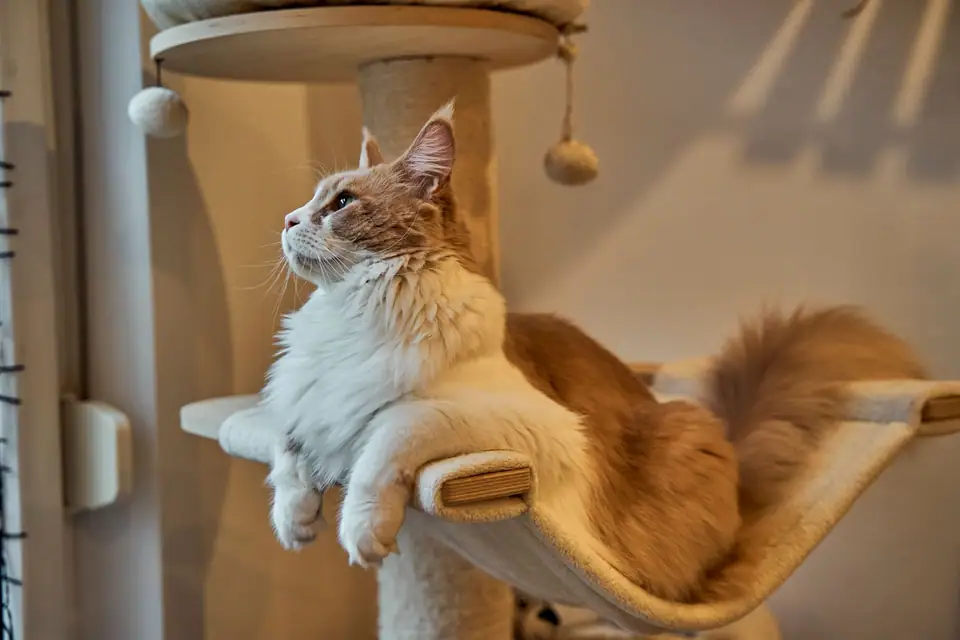
A cat tree for a large cat needs a wide, heavy base, thick posts, perches big enough to lie stretched out on, and a maker-stated weight limit above the cat’s weight. Veterinary guidance asks for perches a cat can fully stretch on and scratching surfaces that do not move or fall over. Use any wall strap supplied.
A 20-pound cat landing on a top perch puts far more force through a tree than a small cat does, and a wobble that a small cat ignores can make a big cat stop using the tree. The checklist below is built from veterinary environmental guidance and makers’ own specifications. We have not tested any tree; makers’ weight and size figures are their claims.
The stability checklist
- Base. Wider and heavier than for an average cat. The taller the tree, the wider the base needs to be.
- Posts. Thick posts flex less. Makers state diameters from about 3.5 inches to 8 inches on trees sold for large cats.
- Perches. The AAFP and ISFM environmental needs guidelines say perches should be “wide enough and long enough to allow the cat to fully stretch.”
- Weight limit. Look for a stated figure per platform or per cat. No stated limit means no promise.
- Anchoring. Use the wall strap or anchor kit if one is included.
Why a heavy cat needs a different tree
The AAFP’s position statement on declawing says scratchers “should be tall or long enough to allow full stretching and stable enough so they do not move or fall over.” Cats Protection asks for “a heavy, stable base so it doesn’t wobble or topple.” Neither is written for trees alone, but the same physics applies: a big cat jumping on or off a tall, narrow tree is the most likely way for it to rock or tip. Cornell Feline Health Center also advises against heavy objects that could fall on a cat during play.
We found no veterinary or welfare guidance that says every tree must be anchored to a wall. Several makers include a strap for that purpose, and using it costs nothing.
Cat trees built for heavy breeds
Live listings, shown by eBay
Opens eBay in a new tab. Check condition, seller feedback and returns.
What makers state for big-cat trees
A few examples show the range. These are maker claims, as listed on their own pages:
| Tree (maker) | Height | Post diameter | Weight limit stated |
|---|---|---|---|
| Giant Cat Tower A8104 (Armarkat) | 80.3 in | 3.5 in | 40 lb per cat; wall safety strap included |
| Queensplace XXL (Cat Tree King) | 40 in | 8 in sisal pole | 88 lb |
| 46 in XXL Heavy Duty (New Cat Condos) | 46 in | Not stated | Not stated |
The comparison shows the trade-off. The very tall tower has thinner posts and relies on a strap; the shorter tree has a much thicker pole and a weighted 24-inch base. Neither is “best”: a tall tree suits a room with a wall to anchor it, a shorter, wider tree suits the middle of a room.
Perch size and shape
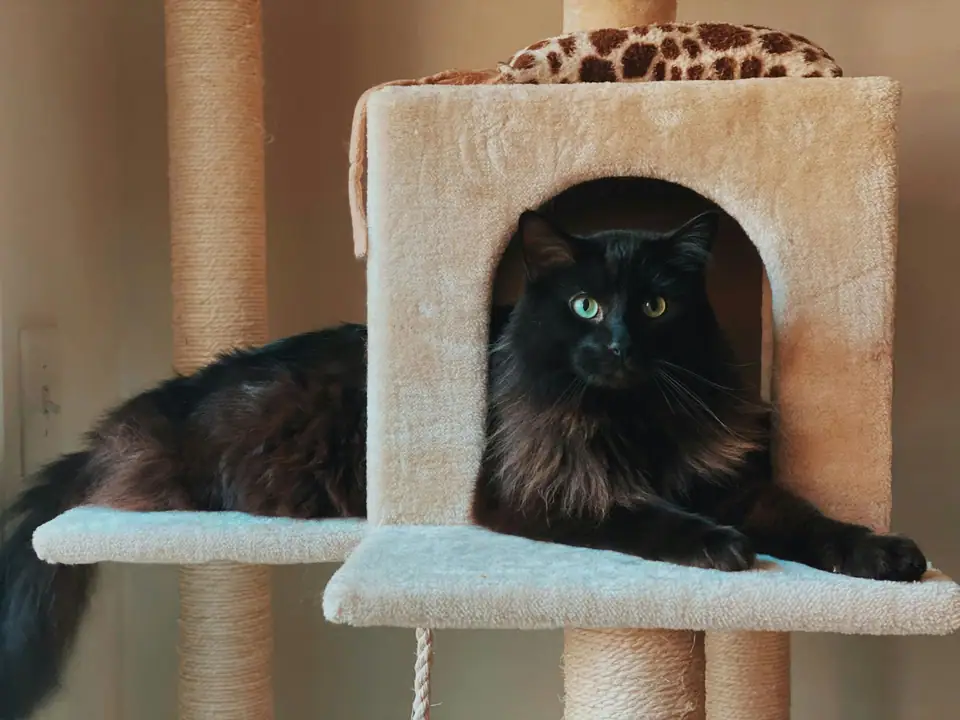
Big cats lie stretched out. The environmental needs guidelines’ rule, perches wide and long enough to fully stretch, rules out small perches a big cat cannot stretch out on. Look for flat platforms or deep baskets listed with their dimensions, and compare them with your cat’s length. A raised rim helps a heavy cat feel secure.
Sisal, carpet and worn parts
Sisal rope or fabric on the posts doubles the tree as a scratching post. The AAFP’s Claw Friendly toolkit reports that most cats aged nine and under preferred sisal rope in a survey, while older cats slightly preferred carpet. Posts wear, so check whether the maker sells replacement posts or sisal. For a dedicated tall post, see scratching posts for large cats.
Furniture-grade trees
Solid wood trees, modular towers and wall-mounted shelf systems look like furniture and often carry heavier cats well, but check the same points: stated weight per shelf, how it fixes to the wall (wall systems should go into studs as the maker instructs) and perch size. They also make a good household gift; see gifts for big cat lovers.
Furniture-grade and wall-mounted cat trees
Live listings, shown by eBay
Opens eBay in a new tab. Check condition, seller feedback and returns.
How tall should a tree be for a big cat?
No veterinary source we found sets a height for a whole tree. Height is a trade-off: a tall tree gives a big cat a high lookout, but it adds turning force at the base every time the cat jumps on or off the top. Match height to base. A floor-to-ceiling tree or a very tall tower is safest with a very wide, heavy base or a wall strap, as Armarkat provides for its 80-inch tower. A shorter tree with a thick pole and a weighted base, like the 40-inch Queensplace XXL, can stand in the open.
For scratching, height matters more: the AAFP says a scratcher should let the cat stretch fully. If the tree doubles as the main scratching post, the sisal section should reach above your cat at full stretch.
Keeping an older tree safe
Trees loosen and wear. Tighten bolts as the maker’s instructions describe, replace worn sisal or posts with the maker’s parts, and retire a tree that rocks when you push the top perch by hand. A heavier cat finds a weak joint faster than a light one.
Trees as exercise
The 2021 AAHA weight management guidelines list cat trees, alongside feather toys and exercise wheels, among ways to increase exercise in cats. For a large breed, climbing is part of keeping weight and joints in shape; see the care section and toys for large cats. For how big the breeds get, see the large breeds size table, and for the rest of the sized-up basics, the supplies hub.
Frequently asked questions
What is the best cat tree for large, heavy cats?
One with a wide, heavy base, thick posts, perches big enough for the cat to lie stretched out, and a maker-stated weight limit well above your cat's weight. We do not rank trees we have not used; use those criteria to compare listings.
How tall should a cat tree be for big cats?
There is no veterinary height rule for a whole tree. Height adds turning force at the base, so a tall tree needs a wider base or a wall strap. For scratching, the AAFP says a post should let the cat stretch fully, which for a big cat often means 3 feet or more.
Should I anchor a cat tree to the wall?
If the maker supplies a strap, use it. We found no veterinary guidance that requires anchoring, but the AAFP says scratchers should be stable enough not to move or fall over, and Cornell warns against heavy objects that could fall on a cat during play.
How much weight can a cat tree hold?
Only the maker can say. For example, Armarkat states 40 pounds per cat for its A8104 tower and Cat Tree King states 88 pounds for its Queensplace XXL. Some makers, such as New Cat Condos for its 46-inch tree, state none; ask before buying for a 20-pound cat.
Sources
- AAFP and ISFM Feline Environmental Needs Guidelines (2013)Journal of Feline Medicine and Surgery, hosted by the Canadian Veterinary Medical Association
- AAFP Position Statement: Declawing (2017)American Association of Feline Practitioners
- ScratchingCats Protection
- Safe toys and giftsCornell Feline Health Center
- Giant Cat Tower for Multiple Cats A8104Armarkat
- Cat Tree for large cats Queensplace XXLCat Tree King
- 46 inch XXL Heavy Duty Cat Tree for Large CatsNew Cat Condos
- 2021 AAHA Nutrition and Weight Management Guidelines for Dogs and CatsAmerican Animal Hospital Association (JAAHA), hosted by the Canadian Veterinary Medical Association
Filed under SuppliesStart with Supplies for Large Cats: What to Size Up and What to Skip
Keep reading
Start here
Supplies for Large Cats: What to Size Up and What to Skip
Which cat supplies need sizing up for a large cat, from litter boxes and trees to carriers and harnesses, how to measure your cat, and what can stay standard.
Supplies
Question
Carriers for Large Cats: Size, Hard vs Soft, and Air Travel
What size carrier a large cat needs, hard versus soft carriers for vet visits, carrying a heavy cat, and the airline in-cabin limits that rule out big cats.
Supplies
Guide
Harnesses for Large Cats: Fit, Escape-Proof Designs, Training
How to fit a harness on a large cat, vest versus H-style harnesses, escape-resistant features, harness training, and why a cat is never left tethered.
Supplies