CareStart here
Caring for a Large Cat: Weight, Joints, Heart and Grooming
How caring for a large breed cat differs from an average cat: judging weight by body condition, joints, heart screening, feeding and grooming, from vet sources.
We earn from qualifying purchases through links on this page. How we make money.
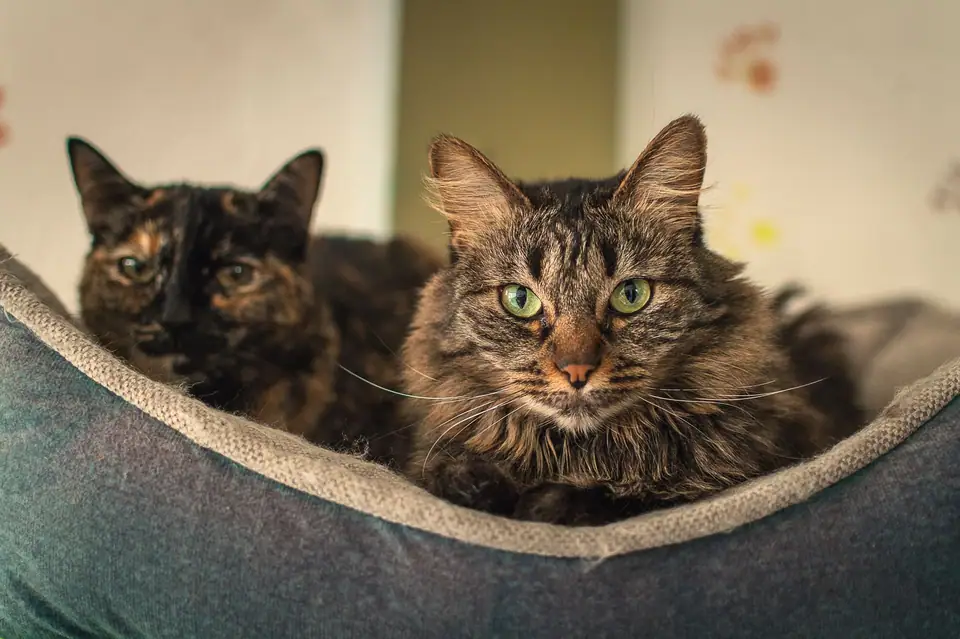
Caring for a large cat differs mainly in four places: judging weight by body condition rather than pounds, keeping heavy joints moving, asking about breed heart screening, and keeping up with a long coat. A healthy Maine Coon male can reach or exceed 20 pounds by the registry’s account, so the usual “ideal weight” numbers do not apply.
None of this needs special products. It needs the right yardstick. The pages in this section answer the questions owners of big breeds ask most, using veterinary schools, the American Animal Hospital Association (AAHA), the World Small Animal Veterinary Association (WSAVA) and International Cat Care. Nothing here replaces a visit to your veterinarian.
Is a big cat overweight, or just big?
Weight alone cannot tell you. A 20-pound Maine Coon may be lean and a 13-pound domestic shorthair may be heavy. Vets use a body condition score instead. On the WSAVA nine-point chart, a score of 5 is ideal: “Well-proportioned. Observe waist behind ribs,” with ribs you can feel under a slight fat covering. Scores of 6 to 9 are over ideal.
The 2021 AAHA guidelines add a useful conversion: each point above 5 of 9 “is equivalent to being 10% overweight.” The Ontario Veterinary College’s pet nutrition service puts it a little higher, at an additional 10 to 15 percent body fat per point, so read the score as a rough guide to how far a cat is from ideal. The AAHA guidelines also ask vets to score muscle separately at every exam, because a cat can be overweight and losing muscle at the same time. The same guidelines name Norwegian Forest Cats among breeds predisposed to weight gain.
How to check body condition at home
- Feel, don’t look. The WSAVA chart’s descriptions of visible ribs refer to shorthaired cats; on a long coat, run your hands along the ribs instead.
- Find the waist. From above, an ideal cat narrows behind the ribs.
- Check the belly. The chart describes the ideal abdominal fat pad as minimal.
- Ask your vet to score body and muscle condition and set a target weight.
Cornell calls obesity “the most frequently observed nutritional disorder” in cats and lists osteoarthritis, hip dysplasia, diabetes and heart strain among the risks. For a big breed, the extra pounds land on joints that already carry a lot.
How fast should an overweight cat lose weight?
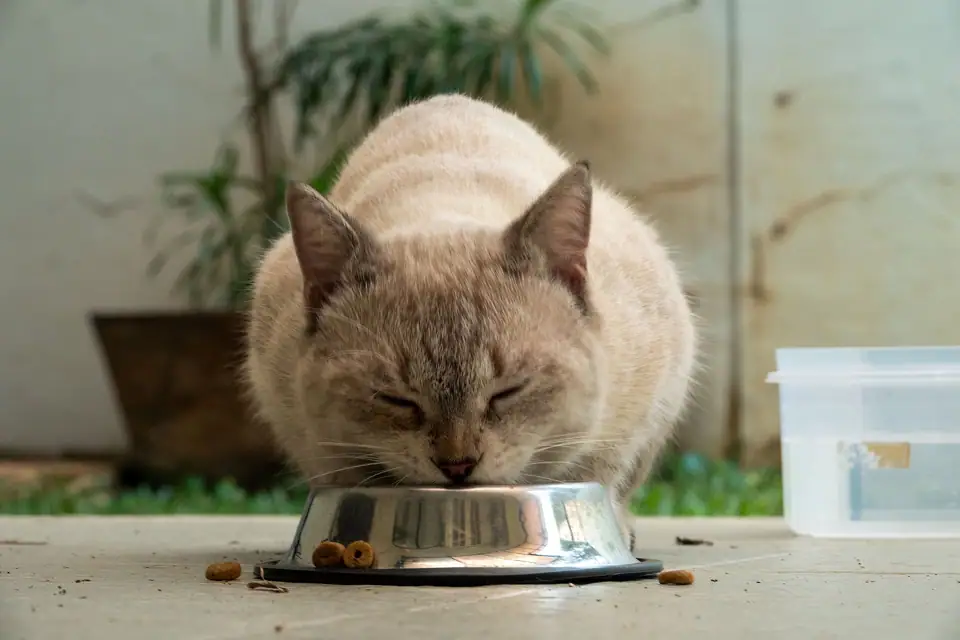
Slowly, and with a vet’s plan. Cornell suggests aiming for “perhaps one or two percent loss of body weight per week” and warns that sudden starvation diets can cause hepatic lipidosis, a serious liver disease in cats. Cornell also advises feeding measured meals rather than leaving food out all day.
As a worked example: for a 20-pound cat, 1 percent of body weight is 0.2 pounds, about 3 ounces a week (our arithmetic from Cornell’s figure), which is easy to miss on a bathroom scale. A pet scale or a vet visit every few weeks gives a clearer picture. The AAHA guidelines add that treats and other extras should stay at or under 10 percent of daily calories.
Wide, raised bowls for big cats
Live listings, shown by eBay
Opens eBay in a new tab. Check condition, seller feedback and returns.
Joints and stairs
Joint disease is common in all cats as they age. Cornell reports a study in which X-rays showed degenerative joint disease in 90 percent of cats over 12; the study, of 100 cats, was published in the Journal of the American Veterinary Medical Association in 2002. Cornell also notes it is “seen more frequently in obese cats.”
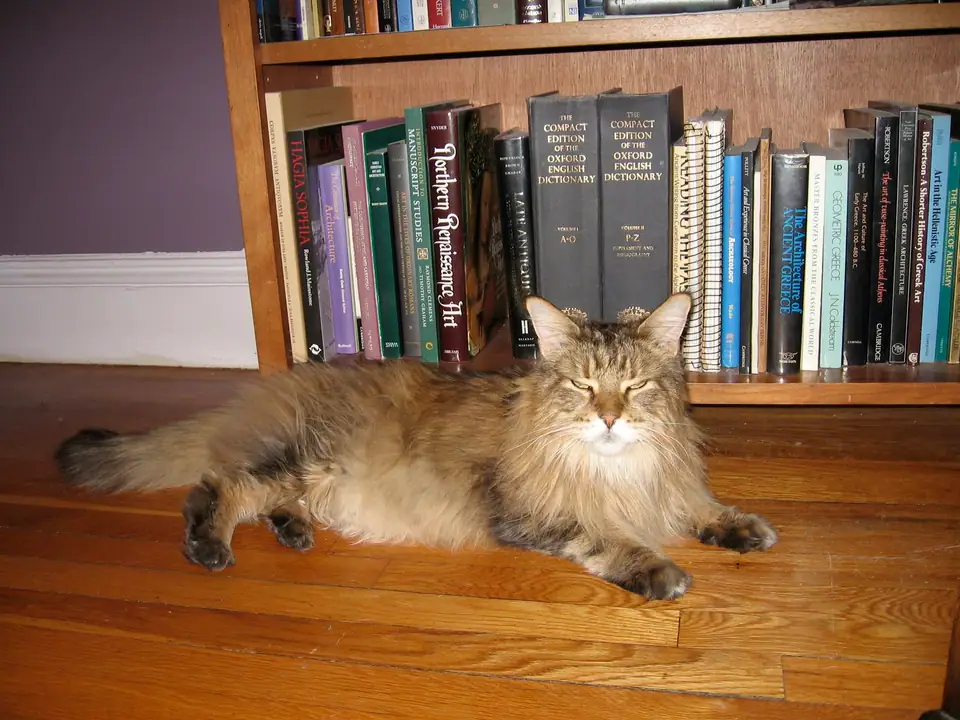
The signs are easy to miss in a big, calm cat: reluctance to jump, stiffness after rest, trouble getting into the litter box and less time spent grooming. International Cat Care suggests steps or a ramp up to favorite high places, a litter tray with at least one low side, and food and water that are easy to reach. The heart and hip page covers hip dysplasia, which is common in Maine Coons.
Heart screening in large breeds
Several big breeds appear on Cornell’s list of breeds in which hypertrophic cardiomyopathy (HCM) is more common: the Maine Coon, Ragdoll, Norwegian Forest Cat, Siberian and British Shorthair among them. Many cats with HCM do not look ill, and Cornell names echocardiography as the gold standard for diagnosis. Gene tests exist for two breed mutations, but a positive result is not a diagnosis. Read heart and hip problems in large breeds for what the tests can and cannot tell you.
Feeding and grooming
Feeding a big cat comes down to the same questions as any cat: the life stage on the label, calories for the cat’s ideal body condition, and a plan set with your vet. There is no breed-specific nutrient profile from the Association of American Feed Control Officials (AAFCO). See feeding a Maine Coon.
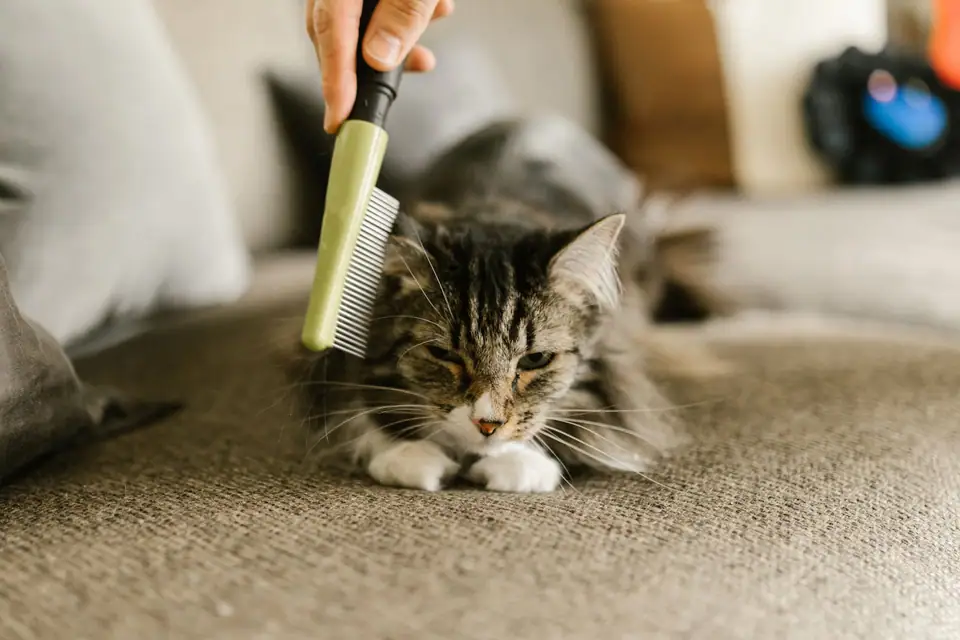
Grooming is where size shows most. International Cat Care says long-haired cats need grooming at least daily, and a large cat has a lot of coat. See grooming a Maine Coon for brushing, mats and nail trims.
| Care area | What changes for a large cat | Where to read more |
|---|---|---|
| Weight | Judge by body condition score, not pounds | This page |
| Joints | Ramps, low-sided litter boxes, steady perches | Heart and hip health |
| Heart | Breed predisposition to HCM; screening by echocardiogram | Heart and hip health |
| Food | Life stage and calories for ideal condition | Feeding a Maine Coon |
| Coat | Daily grooming for long coats | Grooming a Maine Coon |
Play counts as care
The AAFP and ISFM environmental needs guidelines treat play as a need, not an extra: failing to provide predatory-type play “can result in obesity or boredom and frustration.” For a big cat, that means toys that survive a heavy pounce and perches deep enough to stretch out on. See toys for large cats and cat trees for large cats.
Frequently asked questions
How do I know if my large cat is overweight or just big?
Use body condition rather than the number on the scale. On the WSAVA nine-point chart, an ideal cat scores 5: well proportioned, with a waist behind the ribs and ribs you can feel under a slight fat covering. A long coat hides the ribs, so feel rather than look.
Is my cat overweight if it weighs 20 pounds?
Not necessarily. A Maine Coon or Ragdoll male can reach that weight at a healthy body condition, according to the breed registry. Your veterinarian can score body and muscle condition and tell you the right weight for your cat.
How fast should a large cat lose weight?
Cornell suggests about one or two percent of body weight per week and warns that sudden starvation diets can cause a serious liver disease. Ask your vet for a plan and a target before cutting food.
Do large cats get arthritis more often?
Cornell notes that joint disease is seen more often in obese cats and is very common in older cats, with 90 percent of cats over 12 showing signs on X-rays in one study. We found no source giving a separate rate for large breeds, so ask your vet to check a big cat's joints at routine visits.
Sources
- Maine Coon CatThe Cat Fanciers' Association
- Body Condition Score: Cat (WSAVA Global Nutrition Committee chart)WSAVA Global Nutrition Committee, hosted by Ohio State Veterinary Medical Center
- 2021 AAHA Nutrition and Weight Management Guidelines for Dogs and CatsAmerican Animal Hospital Association (JAAHA), hosted by the Canadian Veterinary Medical Association
- Scoring for healthPet Nutrition at OVC, University of Guelph
- ObesityCornell Feline Health Center
- Is Your Cat Slowing Down?Cornell Feline Health Center
- Radiographic evidence of degenerative joint disease in geriatric cats: 100 cases (1994-1997)Journal of the American Veterinary Medical Association, via Europe PMC
- Arthritis in catsInternational Cat Care
- AAFP and ISFM Feline Environmental Needs Guidelines (2013)Journal of Feline Medicine and Surgery, hosted by the Canadian Veterinary Medical Association
Filed under Care
Keep reading
Question
Feeding a Maine Coon: How Much, What Kind, and When to Ask a Vet
What a Maine Coon needs from its food: the life stage on the label, calories for an ideal body condition, wide bowls, and the evidence on breed foods.
Care
Guide
Grooming a Maine Coon: Brushing, Mats and Nail Trims
How to groom a Maine Coon or other big long-haired cat: how often to brush, the tools to use, what to do about mats, nail trims and whether to bathe.
Care
Question
Heart and Hip Problems in Large Cat Breeds: What Owners Should Know
Which large breeds are prone to heart disease (HCM), what gene tests can and cannot tell you, hip dysplasia and SMA in Maine Coons, and what to ask your vet.
Care