CareQuestion
Feeding a Maine Coon: How Much, What Kind, and When to Ask a Vet
What a Maine Coon needs from its food: the life stage on the label, calories for an ideal body condition, wide bowls, and the evidence on breed foods.
We earn from qualifying purchases through links on this page. How we make money.
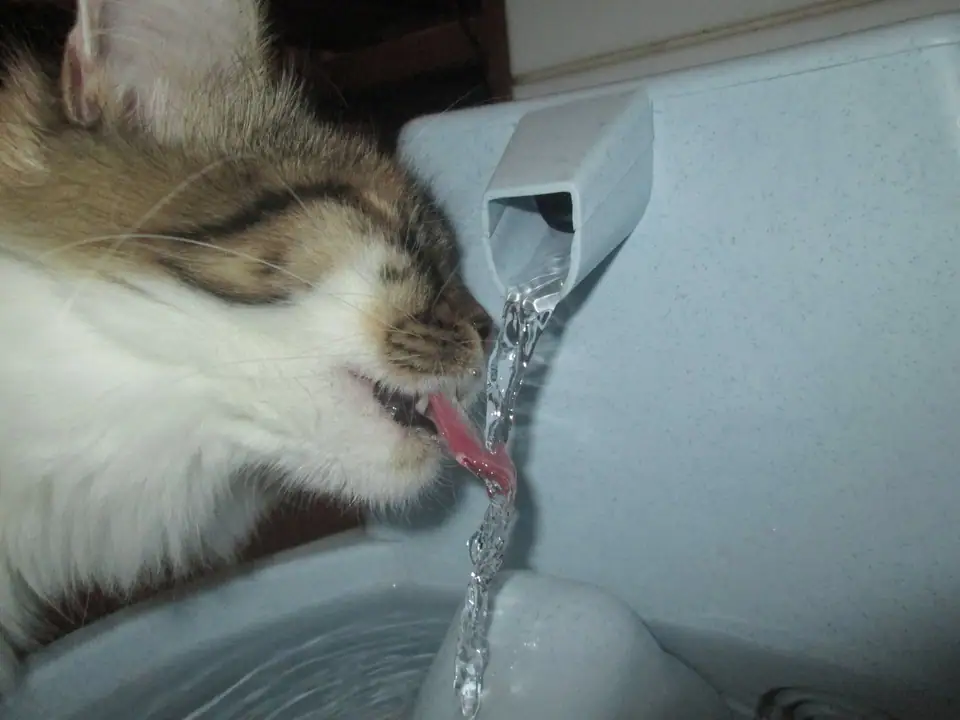
A Maine Coon needs the same thing from its food as any cat: a complete and balanced diet for its life stage, fed at the calories that keep it at an ideal body condition. AAFCO nutrient profiles are set by life stage, not breed, so the label’s life stage statement matters more than a breed name on the bag.
That can feel like a letdown for a breed this big, but it is good news: you can choose from any well-made food. The size of the cat changes how much it eats and what bowl suits it, not what nutrients it needs. Your veterinarian is the right person to set the amount.
What the label must tell you
The Association of American Feed Control Officials (AAFCO) calls the nutritional adequacy statement “perhaps the most important part of a label.” It says whether the food is complete and balanced and for which life stage. AAFCO recognizes four: gestation and lactation, growth, maintenance, and all life stages.
For a Maine Coon, that means:
- A growing cat needs a food labeled for growth or for all life stages.
- An adult can eat a maintenance food or an all life stages food.
- A breed-labeled food must still carry the same statement. Read it like any other label.
The WSAVA Global Nutrition Committee suggests four label checks: the adequacy statement, the calories per gram or serving, contact details for the maker, and who actually makes the food (“Made by” versus “Distributed by”). It also lists questions to ask a brand, such as whether it employs a qualified nutritionist and runs quality control on ingredients and finished products.
Are Maine Coon foods better?
A Tufts veterinary nutritionist, writing on the school’s Petfoodology blog, puts it simply: “the health issues are more important than the breed.” Breed foods may differ in kibble size or shape, and the 2021 AAHA guidelines note that some use a shape meant to help the cat pick the food up. But the guidelines add that recommendations “should be made based on the individual pet.”
So a breed food is fine if your cat likes it and it carries the right adequacy statement. An all breeds food is fine too.
No food links here
We do not link cat food on this site. We cover bowls and feeders only, and leave the choice of food to you and your vet.
How much should a Maine Coon eat?
We found no veterinary source giving a daily amount for the breed, and we will not invent one. The amount depends on your cat’s ideal weight, age, activity and the calories in its food. AAFCO says feeding directions “are guidelines that may need revising,” and the AAHA guidelines ask vet teams to check weight, body condition and muscle regularly when owners feed by the label.
A practical routine:
- Start with the label’s feeding directions for your cat’s target weight.
- Ask your vet to score body condition (5 of 9 is ideal on the WSAVA chart) and set a target.
- Weigh the cat every few weeks and adjust if it gains or loses.
- Keep treats to 10 percent or less of daily calories, the limit in the AAHA guidelines.
The AAFP and ISFM environmental needs guidelines also suggest puzzle feeders and timed feeders “to promote small and frequent meals,” closer to how cats eat when they hunt. The care section explains body condition scoring in more detail.
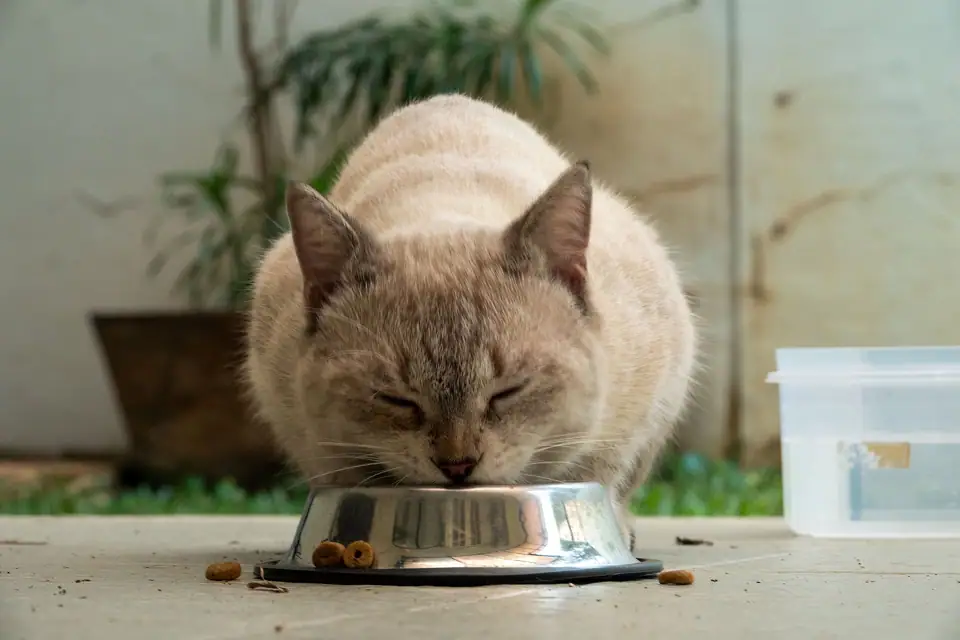
Kitten food to adult food
The 2021 AAHA guidelines say cats typically stay on a growth diet “until approximately 1 yr of age,” at skeletal maturity. The breed registry describes the Maine Coon as taking up to three years to reach full growth, so ask your vet when to switch your cat rather than going by the calendar alone. See how big Maine Coons get.
Bowls, fountains and whisker fatigue
“Whisker fatigue” is a common reason given for wide, shallow bowls. The evidence behind it is thin. In a study of 40 cats published in the Journal of Feline Medicine and Surgery, cats fed from a whisker-friendly dish did not spend more time eating, drop less food or eat more. A Tufts nutritionist writes: “It has not been proven that this condition exists.” In a side-by-side test, though, more than half the cats preferred the whisker-friendly dish.
The fair reading: a wider, shallower bowl is a comfort choice that some cats like, and it suits a large head. If your cat’s eating habits change, see your vet.
Wide, raised bowls and water fountains
Live listings, shown by eBay
Opens eBay in a new tab. Check condition, seller feedback and returns.
Feeding and weight go together with joint care in a big breed: read heart and hip health in large breeds and the grooming guide for the rest of the routine.
Frequently asked questions
Can Maine Coons eat any cat food?
A Maine Coon needs a complete and balanced food for its life stage, the same as any cat. AAFCO nutrient profiles are set by life stage, not breed, and a Tufts veterinary nutritionist writes that a cat's health issues matter more than its breed when choosing a food.
How much should a Maine Coon eat every day?
There is no single figure. The amount depends on the cat's ideal weight, age, activity and the calories in its food. Start from the label's feeding directions, then ask your vet to set a target using body condition, and adjust if the cat gains or loses weight.
When should a Maine Coon switch from kitten food?
AAHA's 2021 guidelines say cats typically eat a growth diet until about one year of age, at skeletal maturity. Maine Coons keep filling out for longer, so ask your vet when to switch your cat.
Do Maine Coons need wide bowls because of whisker fatigue?
The evidence is thin. A Tufts nutritionist writes that it has not been proven whisker stress exists, and a 40-cat study found no difference in how much cats ate from regular or whisker-friendly dishes. Some cats did prefer the wider dish, so it is a comfort choice.
Sources
- Reading LabelsAssociation of American Feed Control Officials
- Selecting the Right Pet FoodAssociation of American Feed Control Officials
- Guidelines on Selecting Pet Foods (updated 2021)WSAVA Global Nutrition Committee
- 2021 AAHA Nutrition and Weight Management Guidelines for Dogs and CatsAmerican Animal Hospital Association (JAAHA), hosted by the Canadian Veterinary Medical Association
- Breed Specific vs All Breed Diets (Heinze, 2018)Tufts Cummings School of Veterinary Medicine, Petfoodology
- Whisker worry: Are cats' whiskers a key to their eating pleasure? (Freeman, 2021)Tufts Cummings School of Veterinary Medicine, Petfoodology
- Evaluation of whisker stress in cats (Slovak and Foster)Journal of Feline Medicine and Surgery, listed by the AAFP
- AAFP and ISFM Feline Environmental Needs Guidelines (2013)Journal of Feline Medicine and Surgery, hosted by the Canadian Veterinary Medical Association
Filed under CareStart with Caring for a Large Cat: Weight, Joints, Heart and Grooming
Keep reading
Start here
Caring for a Large Cat: Weight, Joints, Heart and Grooming
How caring for a large breed cat differs from an average cat: judging weight by body condition, joints, heart screening, feeding and grooming, from vet sources.
Care
Guide
Grooming a Maine Coon: Brushing, Mats and Nail Trims
How to groom a Maine Coon or other big long-haired cat: how often to brush, the tools to use, what to do about mats, nail trims and whether to bathe.
Care
Question
Heart and Hip Problems in Large Cat Breeds: What Owners Should Know
Which large breeds are prone to heart disease (HCM), what gene tests can and cannot tell you, hip dysplasia and SMA in Maine Coons, and what to ask your vet.
Care