CareGuide
Grooming a Maine Coon: Brushing, Mats and Nail Trims
How to groom a Maine Coon or other big long-haired cat: how often to brush, the tools to use, what to do about mats, nail trims and whether to bathe.
We earn from qualifying purchases through links on this page. How we make money.
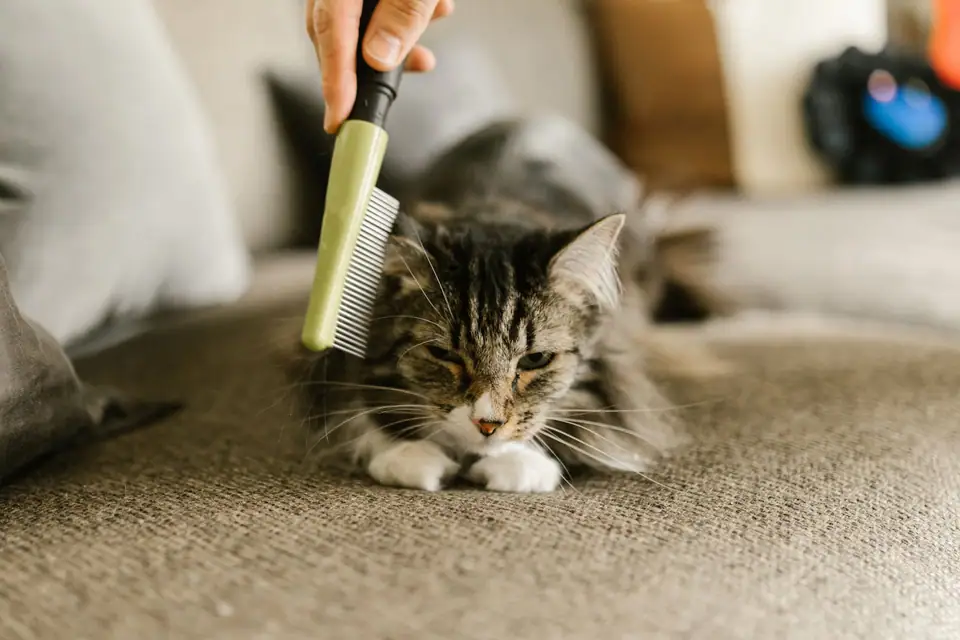
Groom a Maine Coon a little every day. International Cat Care says long-haired cats need grooming at least daily, as long as the cat is comfortable, and never with scissors on a mat. Use a wide-toothed comb for the undercoat, work the belly and back legs where the coat is longest, and trim only the clear claw tips.
The Maine Coon’s coat is the breed’s signature and its daily chore. The Cat Fanciers’ Association standard describes it as “heavy and shaggy; shorter on the shoulders and longer on the stomach and britches,” the fur on the back of the hind legs. Those long, soft areas are where tangles start, and a big cat simply has more of them. The same routine works for a Norwegian Forest Cat, Siberian or Ragdoll.
How often should you brush?
Every day is the target. Short sessions of a few minutes, while the cat is relaxed, are easier than a long weekly session that the cat learns to dread. International Cat Care stresses grooming only as long as the cat is comfortable: stop before it struggles and come back later.
If a cat that used to groom itself well starts to look unkempt, take note. International Cat Care lists “less time spent grooming” among the signs of arthritis, which is common in older cats. A big cat with stiff hips may stop reaching its back and hind legs. See heart and hip health in large breeds.
Which tools do you need?
| Tool | What it does | Where to use it |
|---|---|---|
| Wide-toothed metal comb | Reaches through to the undercoat | Body, ruff, britches |
| Fine-toothed comb | Finishes and finds small tangles | Face, legs, paws |
| Slicker brush | Lifts loose topcoat | Back and sides |
| Claw clippers | Trims the clear tip of each claw | Front and back paws |
You do not need a large kit. A good metal comb does most of the work on a Maine Coon coat; the brush is for finishing. Comb in the direction the fur grows, and part the coat with your hand so you reach the skin.
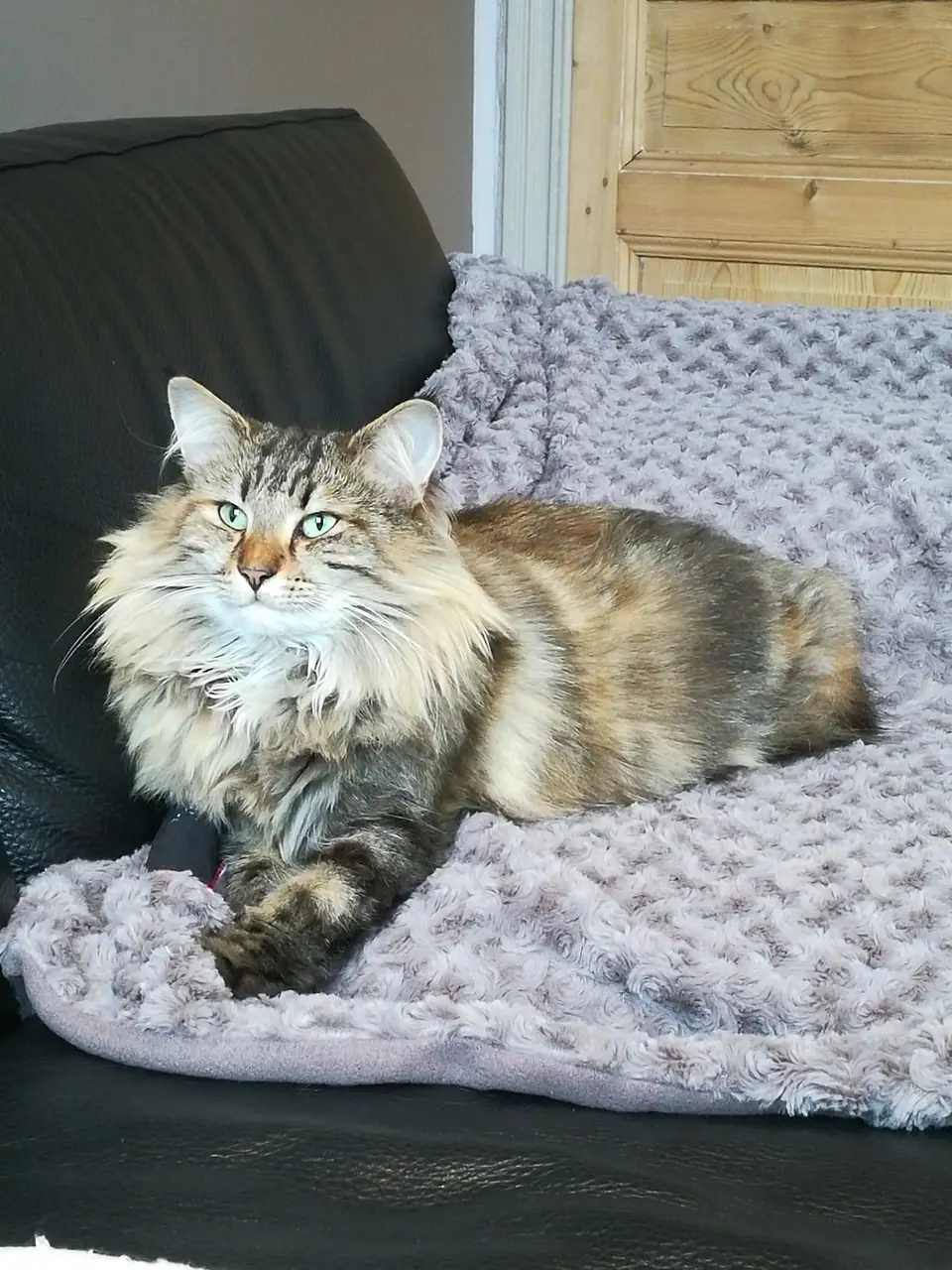
Combs and brushes for a Maine Coon coat
Live listings, shown by eBay
Opens eBay in a new tab. Check condition, seller feedback and returns.
What to do about mats
Check the longest fur first: the CFA standard puts it on the stomach and britches. International Cat Care’s advice:
- Small mats. Tease them apart gently with your fingers, working from the root toward the end of the hair.
- Never use scissors. It is hard to see where skin ends and hair starts, and “you could cut your cat.”
- Larger mats. A professional cat groomer can comb them out. Severe mats “will need to be shaved off by your veterinary team.”
Safety
Do not try to cut a mat out with scissors, even close to the tips. Cat skin is thin and pulls up into the mat. Ask a cat groomer or your vet.
Nail trims
International Cat Care says to use claw clippers and “snip off just the transparent tip,” keeping clear of the pink quick inside. It gives no fixed schedule. Instead, watch for claws catching on carpet or bedding, claws visible when the cat is at rest, or a tapping sound on hard floors. Older or less mobile cats scratch less and their claws can overgrow, catch, or even grow into the pads. If you are unsure, your vet team can trim them and show you how.
A tall, stable scratching post helps a big cat keep its own claws in shape. See scratching posts for large cats.
Baths and hairballs
International Cat Care is clear on baths: “If your cat is healthy there is no reason to bath your cat,” and most cats do not tolerate it well. Regular combing keeps a Maine Coon’s coat clean.
Hairballs come up often with long coats. A Tufts veterinary nutritionist notes that long-haired cats may get more hairballs. Daily combing removes loose fur before the cat swallows it. If your cat vomits often, coughs or stops eating, see your vet rather than treating it at home.
Where grooming fits
Grooming is part of the routine for any big breed, alongside feeding and weight checks in the care section. To see how coats differ between the long-haired breeds, read Maine Coon vs Norwegian Forest Cat.
Frequently asked questions
How often should I brush a Maine Coon?
International Cat Care says long-haired cats need grooming at least daily, as long as the cat is comfortable. Short daily sessions are easier on the cat than a long session once a week, and they catch tangles before they become mats.
What is the best brush for a Maine Coon?
A wide-toothed metal comb that reaches the undercoat, a slicker brush for the topcoat, and a finer comb for the face and paws cover most needs. The coat is heaviest on the stomach and back legs, so check those areas first.
Can I cut a mat out of my cat's fur?
No. International Cat Care warns against scissors because it is hard to see where skin ends and hair starts, and you could cut your cat. Tease small mats apart with your fingers; a professional cat groomer or your vet team can deal with larger ones.
Should I bathe my Maine Coon?
International Cat Care says a healthy cat has no need for a bath and most do not tolerate it well. Regular combing keeps the coat clean. Ask your vet if your cat's coat looks greasy or the cat stops grooming itself.
Sources
- Grooming your catInternational Cat Care
- Trimming your cat's clawsInternational Cat Care
- Arthritis in catsInternational Cat Care
- Maine Coon Cat (breed profile and standard)The Cat Fanciers' Association
- Breed Specific vs All Breed Diets (Heinze, 2018)Tufts Cummings School of Veterinary Medicine, Petfoodology
Filed under CareStart with Caring for a Large Cat: Weight, Joints, Heart and Grooming
Keep reading
Start here
Caring for a Large Cat: Weight, Joints, Heart and Grooming
How caring for a large breed cat differs from an average cat: judging weight by body condition, joints, heart screening, feeding and grooming, from vet sources.
Care
Question
Feeding a Maine Coon: How Much, What Kind, and When to Ask a Vet
What a Maine Coon needs from its food: the life stage on the label, calories for an ideal body condition, wide bowls, and the evidence on breed foods.
Care
Question
Heart and Hip Problems in Large Cat Breeds: What Owners Should Know
Which large breeds are prone to heart disease (HCM), what gene tests can and cannot tell you, hip dysplasia and SMA in Maine Coons, and what to ask your vet.
Care