SuppliesQuestion
Litter Boxes for Large Cats: How Big Is Big Enough?
How big a litter box a large cat needs: the 1.5 times body length rule from veterinary guidance, how many boxes, covered or open, and boxes that fit a big cat.
We earn from qualifying purchases through links on this page. How we make money.
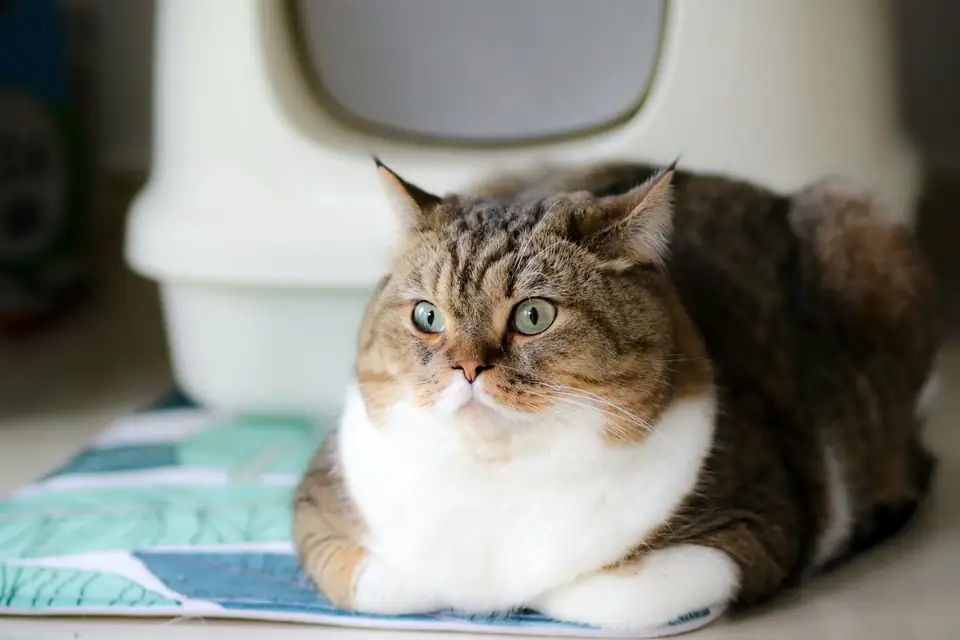
A litter box for a large cat should be about 1.5 times the cat’s length from nose to base of tail, according to veterinary guidance from the Feline Veterinary Medical Association and International Cat Care. For a 20-inch Maine Coon, that means a box around 30 inches long.
“In general, bigger is better and many commercial litter boxes are too small,” says the Feline Veterinary Medical Association (FelineVMA, the new name of the American Association of Feline Practitioners) in its client guide on house soiling. The same guidance goes back to the 2014 AAFP and ISFM house-soiling guidelines, which name the litter box as one of two first steps in any house-soiling problem.
How to measure your cat for a litter box
Measure from the tip of the nose to the base of the tail, not to the tail tip. A relaxed cat lying on its side is easiest. Then multiply by 1.5:
| Cat’s length, nose to base of tail | Estimated minimum box length (1.5 x) |
|---|---|
| 16 in | 24 in |
| 18 in | 27 in |
| 20 in | 30 in |
| 22 in | 33 in |
These are worked examples, our arithmetic: each row multiplies an example length by the 1.5 factor from FelineVMA and International Cat Care, and the result is an estimate of the minimum. FelineVMA notes that many commercial boxes are too small, so check the inside length in the listing, not the outside size. Width matters too: a big cat needs room to turn around and dig.
Storage bins and mixing trays
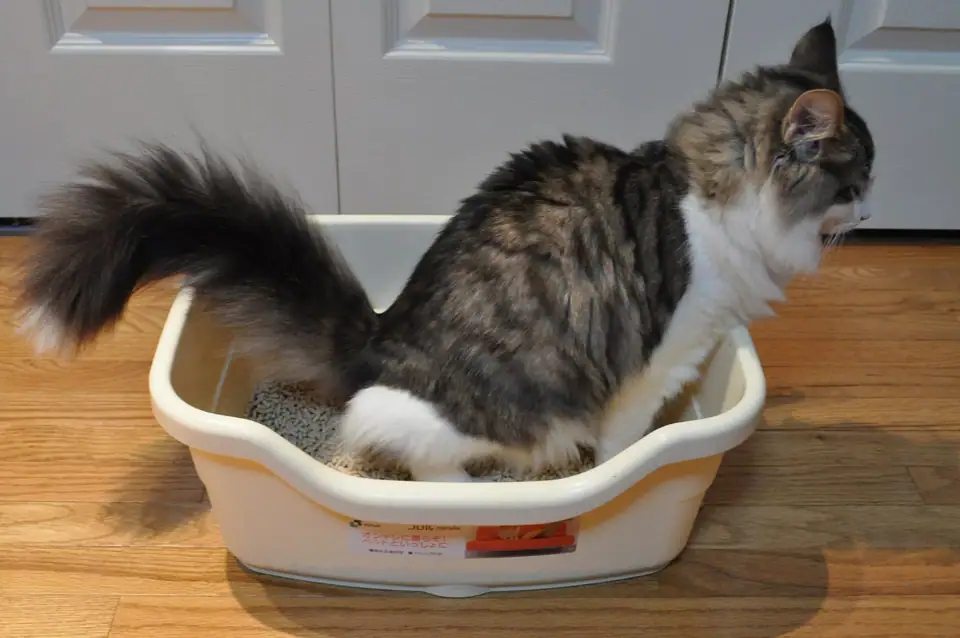
FelineVMA names “concrete mixing trays or storage containers” as suitable alternatives. They are often the easiest way to get a 30-inch box. Two adjustments make a bin work:
- Cut a low entry on one side if the cat is older or stiff. FelineVMA says older cats “need a low entry,” and to check for sharp edges.
- Keep the lid off, or place it behind the box to protect the wall, as FelineVMA suggests.
Bins and looks
The trade-off with a bin is looks. If the box has to sit in a living space, see litter box furniture for big cats, but check that the cabinet holds a box long enough for your cat.
Extra large and high-sided litter boxes
Live listings, shown by eBay
Opens eBay in a new tab. Check condition, seller feedback and returns.
Open, covered or top entry?
Open boxes are the safe default. Cornell Feline Health Center says “most cats prefer simple boxes without hoods,” and the AAFP’s Claw Friendly toolkit recommends uncovered boxes. International Cat Care adds a point that matters for big cats: “Large breed cats in particular may find smaller hooded trays challenging to use,” because they cannot position themselves or dig easily.
Top-entry boxes ask the cat to jump in and out through the lid. For a young, agile cat that may be fine. For a heavy or older cat, or one with stiff hips, a low-sided open box is kinder; see heart and hip health in large breeds.
How many boxes, and where?
FelineVMA’s rule is “one litter box for each cat, plus one extra box, in multiple locations around your home.” Boxes placed side by side do not count, because the cat “considers boxes close to each other one large litter box.” Other placement advice from the same guide:
- Quiet, private spots, away from food and water.
- Not in busy corridors or corners where another pet can block the way out.
- One on each level of a multi-level home, and for an older cat, one where it spends most of its time.
Litter, depth and cleaning
FelineVMA says “most cats prefer soft, unscented, clumping litters” and that many dislike scented litter, deodorizers and liners. International Cat Care cites research showing cats prefer a litter depth of about 3 cm, a little over an inch.
On cleaning, FelineVMA says to remove waste at least once a day and wash the box every one to four weeks with soap and hot water only. International Cat Care goes further and suggests scooping at least twice a day. A big cat produces more waste, so a bigger box also needs more litter and more frequent topping up.
What about self-cleaning boxes?
Automatic boxes save scooping, but fit is the question for a big cat: each maker states its own weight range and entry size, and International Cat Care notes that many are small and that their movement can startle cats. See self-cleaning litter boxes for large cats for the makers’ stated limits. For the rest of the gear a big cat outgrows, start at the supplies hub.
Frequently asked questions
How big should a litter box be?
Veterinary guidance from the Feline Veterinary Medical Association and International Cat Care says about 1.5 times the cat's length from nose to base of tail. For a cat that measures 20 inches, that is a box about 30 inches long.
How many litter boxes per cat?
One per cat plus one extra, placed in different spots rather than side by side. The Feline Veterinary Medical Association notes that a cat treats boxes placed close together as one large box.
Are covered litter boxes bad for large cats?
They can be. International Cat Care says large breed cats in particular may find smaller hooded trays hard to use, since they cannot position themselves or dig easily, and Cornell says most cats prefer simple boxes without hoods.
Can I use a storage bin as a litter box?
Yes. The Feline Veterinary Medical Association names concrete mixing trays and storage containers as suitable alternatives to commercial boxes, which are often too small. Cut a low entry if your cat is older or stiff, and smooth the edges.
Sources
- Feline House-soiling: Useful Information for Cat Caregivers (2026)Feline Veterinary Medical Association (formerly the AAFP)
- AAFP and ISFM Guidelines for Diagnosing and Solving House-Soiling Behavior in Cats (2014)Journal of Feline Medicine and Surgery, listed by the AAFP
- AAFP Claw Friendly Educational Toolkit: Scratching ResourcesAmerican Association of Feline Practitioners
- Choosing a litter tray for your catInternational Cat Care
- Choosing and Caring for Your New CatCornell Feline Health Center
Filed under SuppliesStart with Supplies for Large Cats: What to Size Up and What to Skip
Keep reading
Start here
Supplies for Large Cats: What to Size Up and What to Skip
Which cat supplies need sizing up for a large cat, from litter boxes and trees to carriers and harnesses, how to measure your cat, and what can stay standard.
Supplies
Question
Carriers for Large Cats: Size, Hard vs Soft, and Air Travel
What size carrier a large cat needs, hard versus soft carriers for vet visits, carrying a heavy cat, and the airline in-cabin limits that rule out big cats.
Supplies
Comparison
Cat Trees for Large Cats: Base, Posts and Perches That Hold
How to choose a cat tree for a large, heavy cat: base footprint, post thickness, perch size, maker weight limits, wall straps and furniture-grade options.
Supplies